
From Beijing to Shanghai: The rise of tastings and professional carvers
The Asian market has undergone an unprecedented transformation in its appreciation for European gourmet products, establishing Iberian ham in China as one of the most desired luxury items valued by local consumers.
Thanks to the opening of new trade routes and the easing of export protocols, this iconic product of Spanish gastronomy has achieved a massive presence in major Chinese cities, where it is perceived not just as food, but as a symbol of status and sophistication.
? From the pasture to your home at producer prices!
DO Los Pedroches 100% Acorn-Fed Iberian Ham Selection
Delight your palate with a unique piece without overpaying: a distinctive aroma, slow curing, and traditional craftsmanship in every slice.
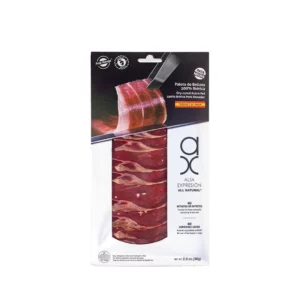
Reserve your COVAP Sliced Acorn-fed 100% Ibérico Pork Shoulder (2 oz) with an exclusive discount!
The growing Chinese middle class, increasingly interested in traceability and nutritional quality, has found in Iberian ham in China the perfect balance between flavor and health, especially appreciating its healthy fats and natural curing process. International promotional campaigns have been key to educating the public about the differences between various labels, allowing Chinese consumers to distinguish and demand acorn-fed ham for its unique aromatic profile.
Furthermore, the integration of Iberian ham in China into local cuisine is now a reality, frequently appearing paired with select teas or as the star ingredient in traditional festive banquets.
E-commerce platforms and online gourmet food shops have enabled the product to reach even less centralized regions, removing the geographical barriers that existed a decade ago.
The success of Iberian ham in China is also supported by a solid logistical strategy that guarantees the product maintains its organoleptic properties intact during transport, ensuring that the tasting experience in Beijing or Shanghai is identical to that of an oak pasture in Spain. This commercial phenomenon strengthens bilateral economic ties and opens the door to other high-end agrifood products, proving that authentic Spanish artisanal tradition has a bright and expansive future in the Asian giant.
“Pata Negra” as a status gift and symbol of distinction in China
The pork sector’s current regulations, framed by the 2014 Iberian Quality Standard, have transformed how consumers identify the purity and breeding of products through Iberian ham labels.
This system of color-coded seals—black, red, green, and white—aims to guarantee transparency and traceability in a historically complex market.
- The black label distinguishes 100% acorn-fed Iberian ham, the highest tier;
- the red label indicates acorn-fed pieces from crossbred pigs (50-75% Iberian);
- the green label identifies free-range, grain-fed ham (cebo de campo), raised outdoors with pasture and feed;
- and the white label corresponds to grain-fed ham (cebo), produced under intensive farming conditions.
However, the regulations are so strict regarding technical parameters—such as exact carcass weight, slaughter age, or rigid free-range acorn-feeding period dates—that many exceptional quality pieces are legally left “outside the standard.” This happens when a pig, despite being raised outdoors and fed on acorns, falls short of the minimum required weight by just a few kilograms or is slaughtered outside the stipulated dates.
Paradoxically, even though these products cannot bear the official Iberian ham labels, they maintain outstanding organoleptic properties and represent an opportunity for gourmet consumers who prioritize flavor and tradition over a bureaucratic seal.
In short, while regulations ensure a minimum baseline of trust, the producer’s mastery and the biological reality of the animal sometimes escape the rigidity of labeling, creating a quiet category of excellent pieces that do not fit into the official color scheme yet conquer the most demanding palates.
Leading brands of Iberian Ham in China
Currently, the main brands leading the presence and prestige in the Asian giant are:
- Cinco Jotas (5J): This is arguably the most recognized brand with the longest track record in the country. It was a pioneer in exporting the first bone-in ham to China in 2019 and maintains a very strong presence in both the Horeca channel (luxury hotels and restaurants) and e-commerce, thanks to strategic alliances with giants like Alibaba (Tmall) and JD.com.
- Joselito: Internationally renowned as one of the best brands in the world, Joselito has heavily targeted high-net-worth Chinese consumers. Its strategy focuses on exclusivity, maintaining a presence in top gourmet shops and premier hotels in cities like Beijing and Shanghai.
- Sánchez Romero Carvajal: As part of the Osborne Group (like Cinco Jotas), this Jabugo brand has a consolidated presence, standing out for its black-seal pieces (100% acorn-fed Iberian) that are highly valued by local consumers seeking the highest quality certification.
- Julián Martín: This company from Guijuelo, Salamanca, has developed a dedicated structure for the Chinese market, including direct customer service in Chinese. Its approach combines exporting whole legs with convenience formats (pre-sliced packs) that facilitate home consumption.
- Señorío de Montanera: A benchmark brand in the D.O.P. Dehesa de Extremadura that has gained ground in the Asian market due to its focus on organic production and sustainability—values that are gaining traction among the Chinese upper-middle class.
- Beher (Bernardo Hernández): Another firm from Guijuelo with an active international distribution network that has positioned its products at major food trade fairs in China, leveraging the recognition of its international awards.
The success of these brands is backed by the work of the Interprofessional Iberian Pig Association (ASICI), which recently succeeded in getting “Iberian Ham” recognized as one of the top 100 high-quality brands in China, boosting the prestige of the entire sector nationwide.
The rise of Spanish gastronomy conquers the Chinese market
The select flavors of Spain are gaining growing popularity in China, transforming gastronomy into a solid cultural and commercial bridge. In key cities such as Shanghai, demand for Spanish gourmet products—like traditional paella and authentic Iberian ham—has shifted from a niche luxury to an everyday dining option.
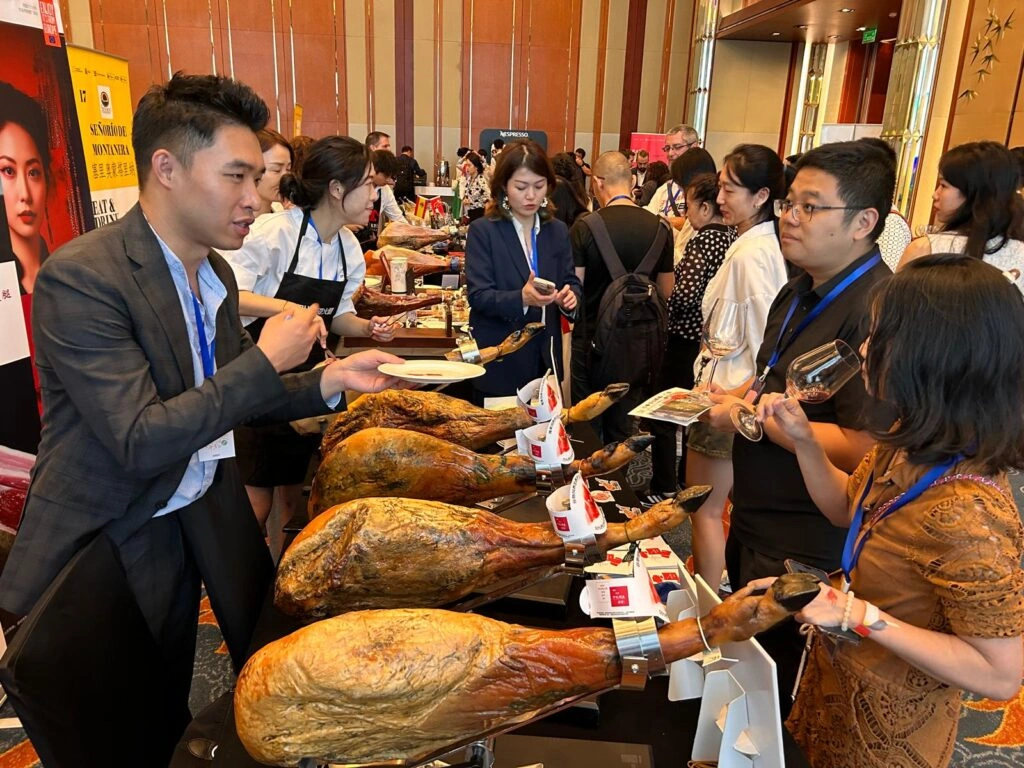
This surge encompasses not only restaurant consumption but also interactive experiences where customers learn carving techniques and food preparation. These activities allow Chinese consumers to connect deeply with Spain’s culinary culture.
Rising consumption reflects a clear commercial trend, positioning China as one of the most relevant export markets for the Spanish pork and agrifood industry. Streamlined access to commercial platforms has significantly driven these numbers across the Asian nation.
Ultimately, this phenomenon highlights the bilateral strengthening between both nations. As Spain’s most important trade partner outside the European Union, China demonstrates that strong interest in high-quality imports solidifies economic and cultural bonds.
Iberian Ham in China: Consolidation
High-end Spanish food products are gaining growing popularity in China due to strengthening trade ties, drawing crowds to restaurants in Shanghai for traditional paella and healthy ingredients like olive oil.
This surge in demand has transformed the retail market, leading sales of imported Iberian ham to double in five years as it transitions from a luxury item to part of everyday dining culture. Supported by platforms like the China International Import Expo, Spanish agricultural sectors report steady growth since 2018 and plan to keep investing, cementing China as their main partner outside the EU.
In summary, the consolidation of Iberian ham in China marks a milestone in food exports, transforming a traditional product into a global cultural phenomenon that continues to win over enthusiasts every day with its unrivaled quality and international prestige.