The Rise of the Clean Label Movement: Why Consumers Are Rejecting Artificial Additives
Consumer behavior is undergoing a significant shift, reflected in a greater scrutiny of food labels before purchasing. There is a clear trend toward a diet based on less processed products, with simple ingredients and traditional production methods.
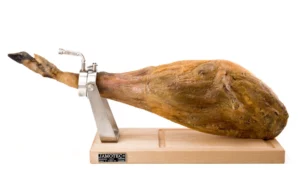
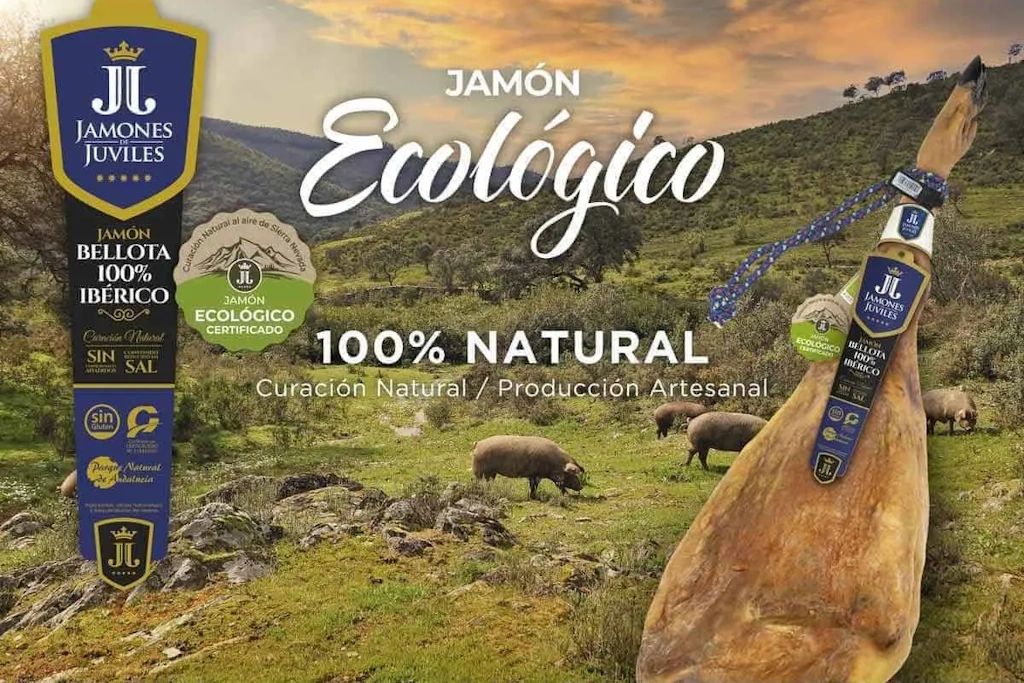
This movement is also transforming the cured ham sector, where products made without artificial additives or preservatives are awakening growing interest for being perceived as more natural, healthy, and faithful to tradition. Far from being a passing fad, this trend responds to a philosophy focused on recovering craftsmanship, where time, climate, and the ham master’s expertise once again become the true protagonists.
? Get the best online price directly from producers!
Buy 100% Acorn-Fed Iberian Shoulder
Discover the authentic flavor of Pata Negra pieces cured in cellars and sourced from free-range pigs.
Buy Monte Nevado Jamon Iberico Bellota (Shoulder) – Acorn Fed – Exclusive Offer!
Granada as a Benchmark in Traditional Curing
When speaking of 100% natural hams, the province of Granada inevitably stands out. Regions like the Alpujarra of Granada and the Sierra de Baza enjoy privileged climatic conditions due to their altitude, dry air, and low temperatures for much of the year. These meteorological characteristics allow the hams to age and evolve slowly in a natural way, eliminating the need to add chemical additives. This legacy has been preserved through small family businesses that pass down their knowledge from generation to generation. In these curing cellars, the process is carried out with patience and respect for biological timing, using exclusively high-quality pork and sea salt as the sole preserving ingredient.
Preservative-Free Ham: Authenticity, Control, and Rural Sustainability
The simplicity of the ingredients (meat, sea salt, and time) implies a paradox: by not relying on artificial preservatives to correct the process, a much stricter control in the selection of raw materials and management of curing facilities is required. This business model not only adds gastronomic value, but also creates a positive social impact by supporting the business ecosystem in numerous rural towns of Andalusia, keeping alive a trade that forms part of their cultural heritage.
Expansion Toward Iberian Quality
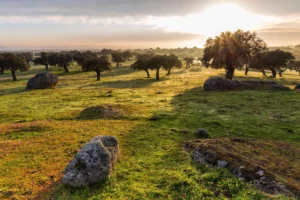
This commitment to purity in production is not limited to Granada. The article notes that highly prestigious areas such as the Protected Designation of Origin (P.D.O.) Los Pedroches, in northern Córdoba, are also part of this movement. There, the raising of pigs in the dehesa pasturelands and their natural diet are complemented by options free of artificial preservatives. Brands like Jamón Pasión respond to this demand by uniting in their catalog both Granada’s natural hams and Córdoba’s select Iberian pieces.
In conclusion, the rise of these products demonstrates that tradition and current consumer demands move in the same direction, connecting with an informed consumer who prioritizes origin, sustainability, and maximum authenticity at their table.
How to Identify Real Preservative-Free Iberian Ham on the Label
Master Ham Makers advocate the consumption of Iberian ham without artificial additives (such as nitrites, nitrates, or colorants, common in the market under codes E-250, E-252, or E-331). Their philosophy focuses on transparency and tradition, producing an organic and pure product containing only two ingredients: ham from free-range raised pigs and sea salt.
Choosing this type of ham brings benefits both for health—by avoiding potentially harmful substances in the long run—and for the palate, as the absence of chemicals allows the authentic, rustic, and intense flavor derived from a slow, natural curing process to shine.
To identify an Iberian ham truly free of additives, consumers must carefully inspect the label, checking that only meat and salt appear, and verify its quality through a soft, juicy texture.