
What is a functional food and why does Iberian ham fall into this category?
The 13th World Ham Congress brought together leading experts to analyze the nutritional properties of one of the greatest jewels of gastronomy. In this forum, a fundamental premise was consolidated: Iberian ham should be formally classified as a functional food due to its extraordinary biological benefits.
Currently, the health factor guides approximately seventy percent of consumer purchasing decisions. Faced with reluctance or distrust towards meat products, the sector needs to back the quality of its pieces with solid scientific evidence.
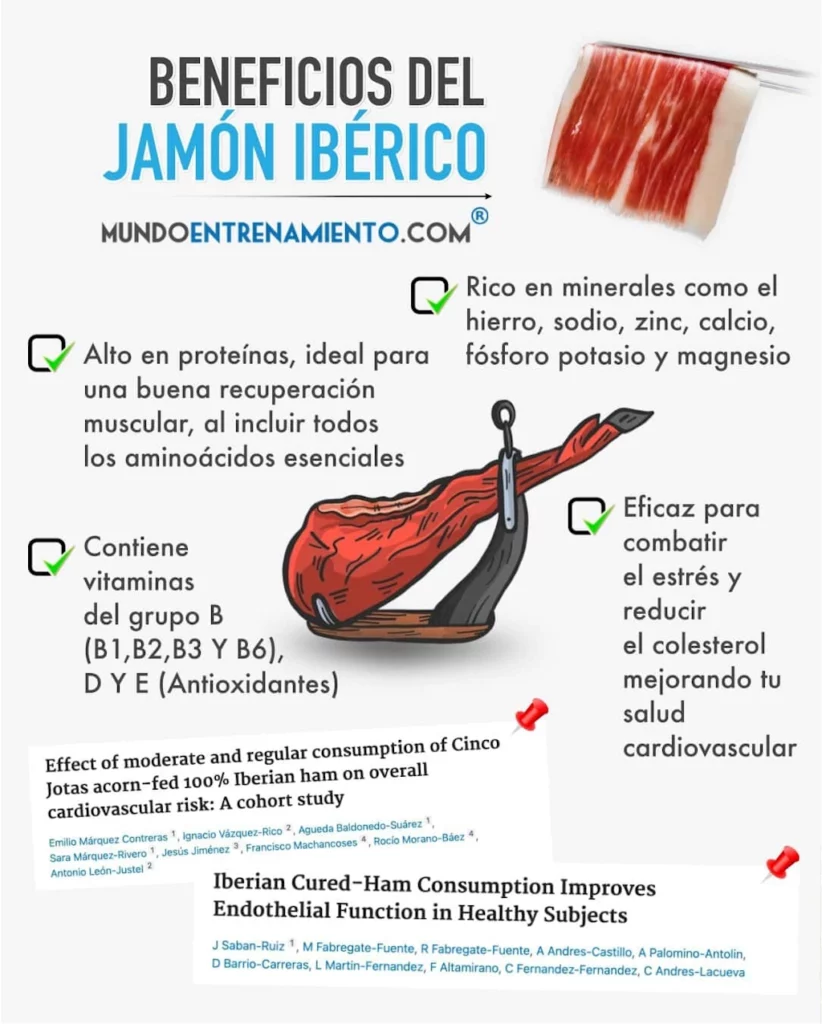
In this context, research highlights that a regular one-hundred-gram portion of Iberian ham provides up to seventy percent of the recommended daily intake of vitamin B12, an essential nutrient for the nervous system and cellular metabolism. Likewise, this product provides a formidable nutritional density, characterized by the presence of proteins of high biological value containing all the essential amino acids necessary for the proper maintenance of the body.
? Save by buying directly from the Dehesa!
Buy Acorn-Fed Iberian Ham Sliced
Get maximum quality at the best origin price: a Premium Ham with an unmistakable aroma, the result of a slow, artisanal curing process.
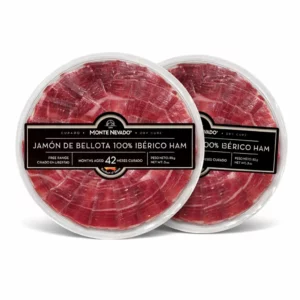
Monte Nevado Jamon Iberico Acorn-fed – 100% Iberico, with a Direct Discount!
A high-value functional food: vitamin B12 and high-quality proteins
During the technical sessions of the congress, specialists in Endocrinology and Nutrition, such as Dr. Antonio Escribano Zafra, invited a reinterpretation of the public and legal perception of this traditional product as a high-value functional food.
Scientists argue that ham should not be labeled under the simple and generic classification of processed meat, but rather understood as a complex food matrix. This structure is the result of a delicate and prolonged purely natural biochemical transformation process.
During the curing stage, the meat undergoes profound changes that give rise to more than seventy unique molecular compounds. Prominent among these substances are bioactive peptides, molecules with a proven capacity to positively influence various bodily functions.
Thus, the balanced consumption of this food directly contributes to the well-being of metabolic health and muscle development. Therefore, the Iberian industry does not merely market a gastronomic good, but an authentic biology applied to caring for the body.
Beyond Ultra-Processed Foods: The Complex Nutritional Matrix of Ibérico Ham
Renowned nutritionist and endocrinologist Antonio Escribano firmly maintains that Ibérico ham is not processed meat, but should instead be classified as a high-nutrient-density food matrix and a true functional food.
At the World Ham Congress, Escribano emphasized that this product cannot be compared to industrial ultra-processed foods, as its production relies on a natural curing process that preserves and enhances its biological properties.
According to the expert, Ibérico ham is not processed meat because it constitutes a complex biological structure rich in bioactive peptides, essential amino acids, and crucial vitamins such as B12—covering up to 70% of the recommended daily intake of the latter with just one hundred grams.
The doctor insists that its consumption offers direct benefits to the cardiovascular system, nervous system, and endothelium, setting it radically apart from other meat derivatives that undergo aggressive transformations.
By stating that Ibérico ham is not processed meat, Escribano seeks to debunk misconceptions and highlight that we are dealing with a biodisplayable “superfood” that the human body has recognized and efficiently metabolized for millennia.
Its composition, rich in unsaturated fats similar to those found in olive oil, makes it a pillar of the Mediterranean diet that helps prevent conditions such as Alzheimer’s and hypertension.
In conclusion, Ibérico ham is not processed meat, but a nutritional treasure whose balanced consumption is essential for a healthy lifestyle and athletic performance, supplying essential minerals like iron, zinc, and magnesium in a natural form that no artificial supplement can match in quality.
Micronutrient Supply and High Biological Value Proteins
Kylian Mbappé, star of Real Madrid, has integrated a staple of Spanish gastronomy into his nutritional regimen to boost his physical performance. The importance of Ibérico ham for athletes lies in its exceptional supply of high biological value proteins and essential amino acids, which are crucial for tissue repair and building muscle mass after intense training sessions.
This food stands out for containing easily absorbed iron, which improves oxygen transport, alongside B-complex vitamins that optimize energy metabolism. Furthermore, acorn-fed (*bellota*) varieties offer oleic acid—a healthy fat that benefits cardiovascular health. Other key minerals present, such as zinc and phosphorus, strengthen the immune system and physical capacity.
However, experts stress that its consumption should be moderate, recommending portions of around 50 grams a couple of times a week to avoid excess sodium. When combined with vegetables and whole grains, it becomes a strategic ally that pairs culinary enjoyment with metabolic efficiency.
Mbappé’s elite diet demonstrates that this product is a valuable tool for optimizing recovery and maintaining peak competitiveness in professional football.
Scientific backing in the face of labeling regulations and the international market
The Iberian ham industry is currently going through a key transition moment to guarantee its positioning in international trade. The major challenge facing the sector lies not only in the dissemination of its biological virtues, but also in establishing solid legal protection that preserves the authenticity and origin of its products.
In a global market characterized by increasingly strict regulations and nutritional warning labels, providing rigorous scientific data is essential to maintaining the competitiveness of the sector.
This joint effort among researchers, legislators, and producers is vital to differentiate traditional ham as a high-value functional food compared to ultra-processed industrial alternatives. In this way, science becomes an indispensable ally to defend the gastronomic excellence of Iberian ham, while ensuring the economic sustainability of an industry essential to the development of rural areas.